
By Isabella Carlson
In Northfield, the housing scene blends both opportunity and challenge. Home prices are steadily increasing, rental availability is tight, and new developments are underway—but many hopes for affordability still depend on local policy and creative housing solutions.
Current Price Trends and Market Pace
The median sale price for homes in Northfield has risen by about 2–2.5% year-over-year, sitting around $390,000–$400,000. Homes are selling more slowly than before, with market time increasing: recent data shows homes staying on the market nearly 28 days compared to around 15 just a year ago.
However, listings are limited. There are just over 100 homes currently listed for sale, reinforcing tight supply.
Rental Supply & Affordability Pressures
Rents in Northfield vary depending on size and location. A one-bedroom unit can run around $1,500+, with larger units renting for more. Affordable rentals are available via income-based programs, but overall rental listings are much fewer compared to homes for sale.
Vacancy rates are extremely low—at about 0.7% for both market-rate and affordable rentals—indicating strong demand and limited turnover.
Development Activity & New Projects
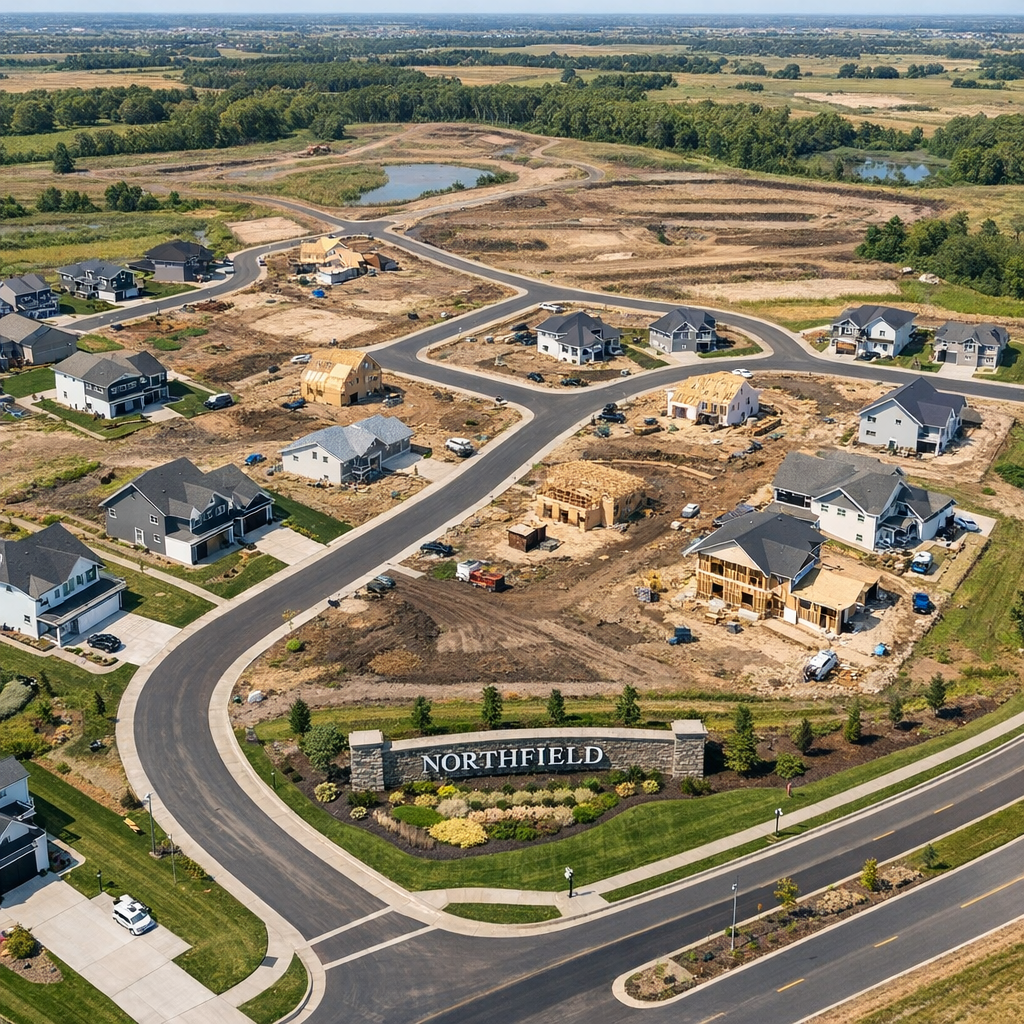
Several housing development projects are in the works. Cedar Meadows will include a range of housing types—detached villas, duplexes, triplexes, senior co-ops, and apartments—along with parks and storm water infrastructure.
The city and Northfield Housing & Redevelopment Authority are exploring a “Southbridge” cooperative neighborhood with 65 factory-built homes intended to be attainable for workforce income levels. Other initiatives include subdividing properties for duplexes and affordable rental or ownership options.
Proposed large developments include Harvest Hills (70+ units) and Heritage Lofts (approx. 138 units), both subject to affordability requirements and policy review.
Support for First-Time Buyers
Northfield offers down payment assistance through its Home Stretch program, and first-time buyers must complete a homebuyer education course to qualify.
Qualification rules include caps on housing and debt ratios (house payment ≤38% of income; total debts ≤43%), and properties with lead-based hazards must pass inspection. These components aim to ensure long‐term sustainability for buyers.
What’s Ahead: Balancing Demand & Policy
Low supply and rising costs make affordability a central concern. Policy responses—such as incentives for builders, preserving existing affordable housing stock, and expanding eligibility for assistance programs—are likely to shape Northfield’s housing landscape.
Smaller, attainable homes are especially in shortage. Detached villas, duplexes, and factory-built homes are part of proposed solutions. Senior housing is also a growth area, particularly age-restricted ownership options.
Tips for Local Home Seekers & Renters
- Get pre-qualified early and understand your budget, taking debt, income, and monthly housing costs into account.
- Work with agents who know Northfield’s neighborhoods and can alert you to opportunities—especially when supply is low.
- Explore affordable and subsidized rental programs—but act fast, since turnover and availability are limited.
- If buying, consider older homes and factor in renovation costs. Also look into local assistance programs for down payments or inspections.
- For developers or policy advocates: push for inclusion requirements and diverse housing types to meet needs across income levels.
Northfield’s housing market is in a moment of transition. Rising prices, tight rental availability, and a developing project pipeline show both stress and potential. With thoughtful community and policy effort, there is hope for more balance and affordability ahead.