
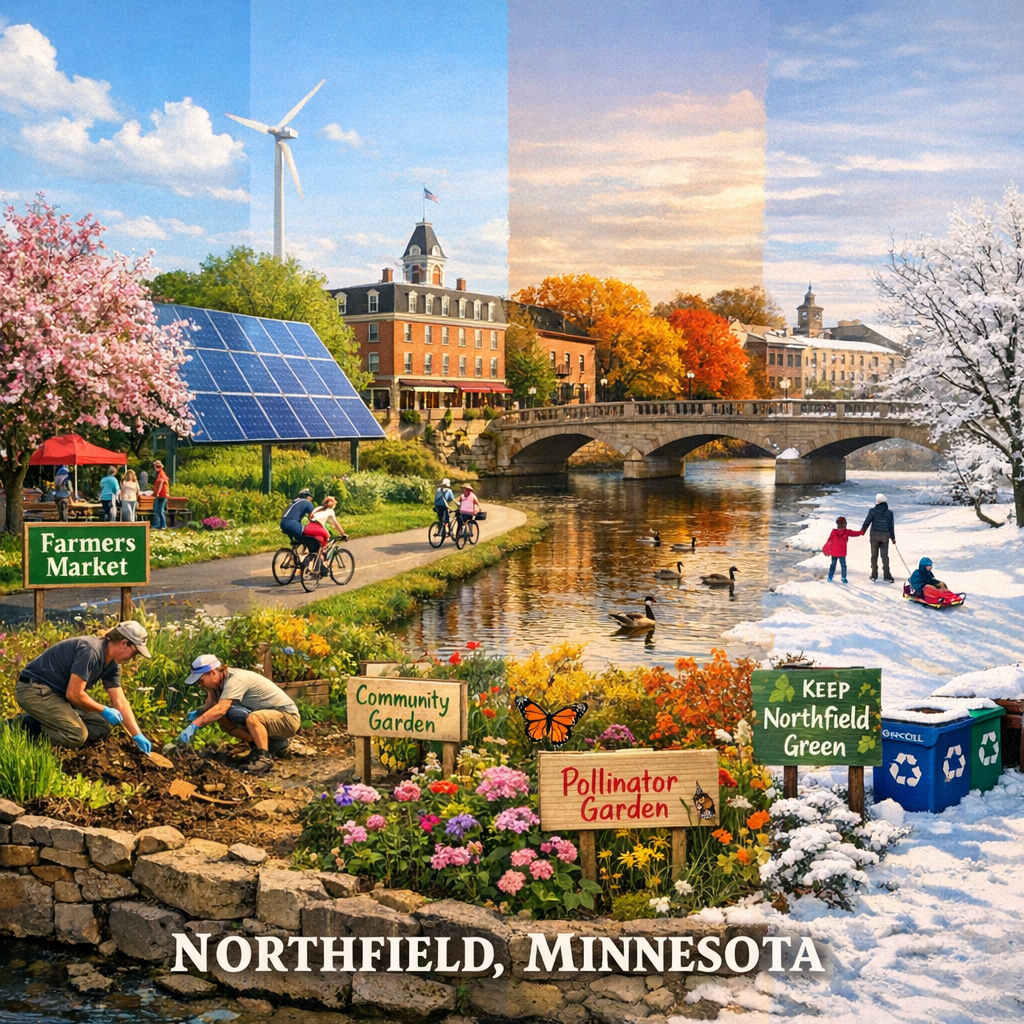
Northfield, Minnesota, experiences a diverse climate characterized by distinct seasonal changes. Understanding these patterns is essential for residents and visitors alike.
Climate Overview
Northfield’s climate is classified as humid continental, featuring warm, wet summers and cold, snowy winters. Average temperatures range from a low of 9°F in winter to a high of 82°F in summer. The warm season typically spans from late May to mid-September, with July being the hottest month, averaging highs of 82°F and lows of 62°F. Conversely, the cold season lasts from late November to early March, with January being the coldest month, averaging highs of 20.8°F and lows of 7.7°F.
Environmental Sustainability Efforts
The City of Northfield has prioritized environmental sustainability through various initiatives. In 2019, the city adopted a Climate Action Plan focusing on six key areas: Energy, Food, Land Use, Materials & Waste, Transportation, and Water. This plan aims to mitigate climate change impacts and enhance community resilience.
Progress toward these goals is ongoing. For instance, the city collaborates with Xcel Energy’s Partners in Energy program to achieve its 2030 carbon-free electricity goal. Additionally, Northfield achieved Step 5 in the GreenStep Cities program in 2021, reflecting its commitment to sustainable practices.
Community involvement plays a significant role in these efforts. Organizations like the Cannon River Watershed Partnership work to protect and enhance local natural resources. Annual events such as the Northfield Earth Day celebration engage residents in sustainability practices through workshops, service opportunities, and educational presentations.
Looking Ahead
As Northfield continues to experience the effects of climate change, the city’s proactive approach to environmental sustainability remains crucial. By understanding local climate patterns and participating in community initiatives, residents can contribute to a more resilient and sustainable future.